

A Story
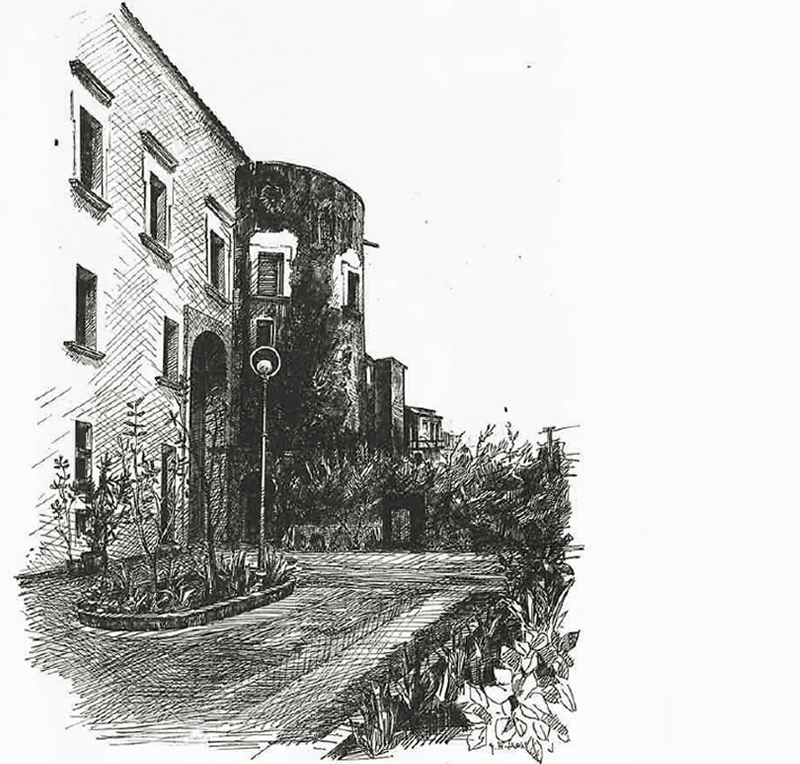

History of the Castle
The first explicit record of the castle’s existence dates back to 1251: in a letter, Manfred, the natural son of King Frederick II, recounts having stayed at the Castle of Acerra. He returned there on several occasions, including the night between 23 and 24 October 1254, seeking refuge while fleeing from papal troops. These accounts confirm not only the castle’s existence, but also its full function as a place of hospitality and accommodation for figures of high rank.
The oldest nucleus of the complex is the eastern wing, located to the right of the main entrance. This area also includes the tower, known as the donjon, built of tuff stone: as archaeological excavations confirm, it was already in existence by the second half of the 12th century. At that time, Riccardo d’Aquino was Count of Acerra, having inherited the county from his uncle Ruggiero de Medania, who in turn had received it from his grandfather Roberto de Medania.
Many feudal lords and noble families succeeded one another in possession of the Acerra fiefdom. Among them were the de Medania, d’Aquino, di Alveto, Sanseverino, d’Angiò, Brunswick, Protogiudice, and Pastore families. In 1408, the fief was acquired by the captain Gurello Origlia, before passing to the Del Balzo-Orsini family, who ruled it until 1486. It was during these years that the castle came into the hands of Frederick of Aragon, who would become King of Naples and Sicily eleven years later, in 1497. Under his influence, the castle underwent a significant change in function, transforming from a defensive structure into a place of leisure.
Nel 1408 il feudo viene acquisito dal capitano Gurello Origlia, per poi passare ai Del Balzo-Orsini, che lo governano fino al 1486. Sono questi gli anni in cui il castello passa a Federico d’Aragona, che diventa Re di Napoli e di Sicilia undici anni dopo, nel 1497: è lui a garantire al castello un effettivo cambio di destinazione d’uso, da struttura difensiva a luogo di svago.
In 1499, the fief of Acerra was sold to the de Cardenas family, who retained control until 1810 through a series of hereditary successions. Between 1810 and 1925—the year in which the castle was purchased by the Municipality of Acerra—the property belonged to the Spinelli family, heirs of the de Cardenas, though without feudal rights, as feudalism had been abolished in 1808.

your visit
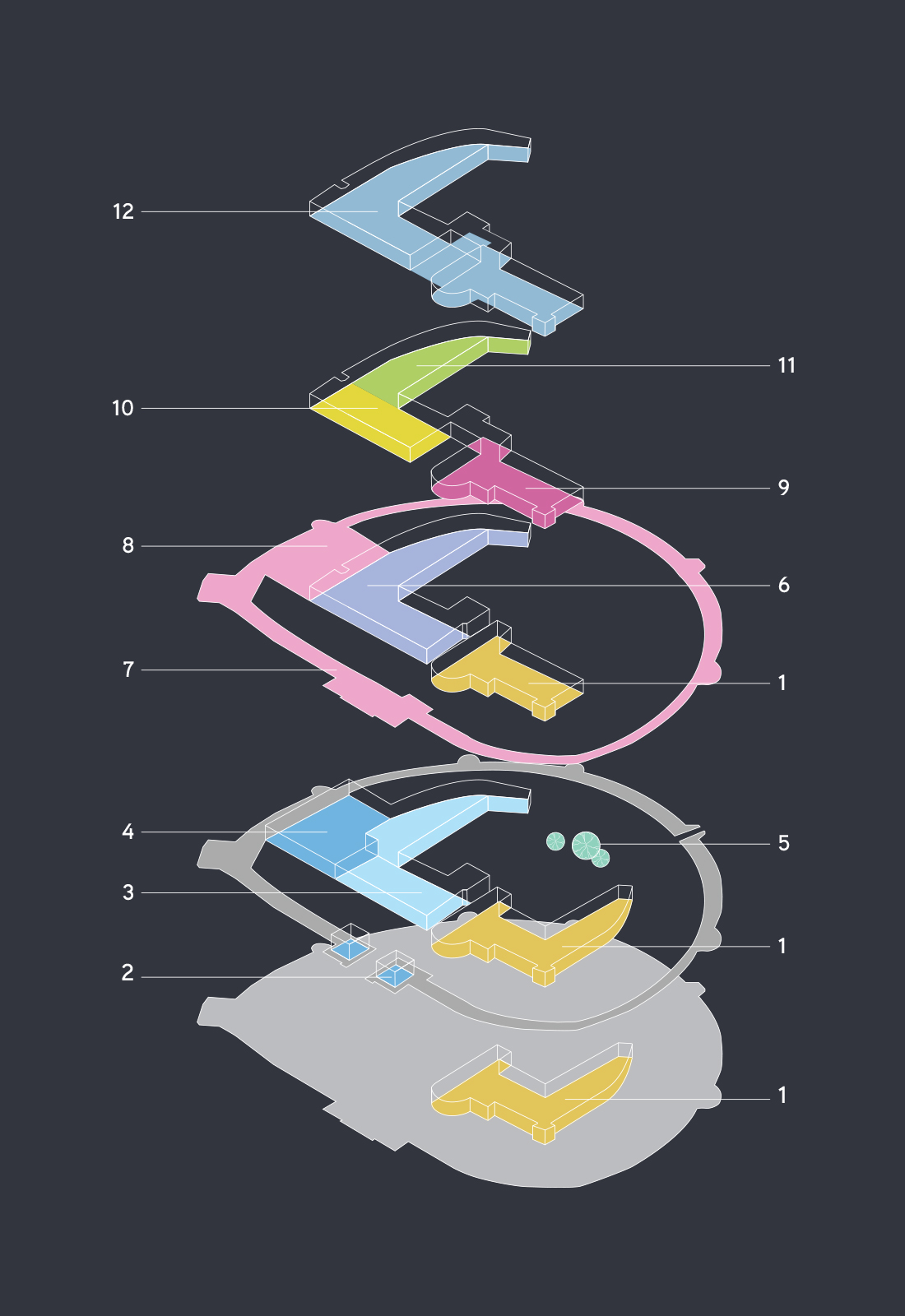
1 MAAS: Archaeological Museum of Acerra and Suessul
The MAAS – Archaeological Museum of Acerra and Suessula – unfolds through several areas of the Castle. Through the display of archaeological finds and the remains of an ancient Roman theatre, it offers visitors insights into the past of the city of Acerra.
2 Ticket Office and Bookshop
3 Museum of Folklore and Rural Civilization
In addition to exhibiting historical ornaments and household objects, the Museum of Folklore and Rural Civilization guides visitors through the atmosphere of traditional rural culture in the Acerra area. To enrich the exhibition, agricultural and domestic settings have been reconstructed in some rooms, reflecting the spaces where daily life of the local population once took place.
4 Conference Hall
5 Inner Garden
6 Pulcinella Museum
The Castello dei Conti hosts a museum route dedicated to the famous mask of Pulcinella, which has been connected to the city of Acerra and its historical and social traditions since ancient times.
7 Walk Along the Ramparts
8 Event Terrace
9 Gaetano Caporale Municipal Library
The rooms in the oldest area of the Castle house the municipal library dedicated to Gaetano Caporale, a renowned historian from Acerra. Established in 1972, the library preserves historical documentation of great importance, contributing to the reconstruction of the history of the Acerra community and beyond.
10 Virtual Museum of History and Archaeology
On the second floor, a multimedia route is dedicated to the history and archaeology of the Acerra territory. Through new technologies, it offers visitors an interactive and immersive journey into the city’s past.
11 Museum of Musical Traditions
The second floor also hosts the Museum of Musical Traditions: a multimedia and interactive journey through the rich history of Acerra’s musical heritage.
12 Smart Hub
The Archaeological Museum
The earliest evidence of the ancient settlement of Acerra is rooted in the deepest layers of the area’s history: in the heart of the Baronial Castle, the remains of an ancient Roman theatre are preserved, over which the medieval fortress dominating the main square was later built. It is within this richly stratified context — from the walls in opus reticulatum to the brickwork typical of the Roman age — that the MAAS – Archaeological Museum of Acerra and Suessula takes shape. The museum, inaugurated at the Castello dei Conti on 19 October 2023, aims to offer visitors a coherent and well-documented journey through the past of the two ancient cities that once rose in the plain of the Regi Lagni.
The museum is arranged over three rooms along a single itinerary: the first, on the ground floor, introduces the core of the exhibition with the archaeological remains of the Roman theatre, a tangible testimony to the urban development of ancient Acerrae and to the relationship between public architecture and the community. Continuing along the route, the corridors lead to rooms displaying ceramics, grave goods, and artefacts dating from the Roman period to the Hellenistic age, unearthed in local necropolises, which illustrate the evolution of daily life and ritual practices in the area between Acerra and its immediate hinterland.
The final room is dedicated to the city of Suessula, a flourishing centre from as early as the 9th century BC, whose history can be traced through evidence from the forum and the necropolises. Here, the artefacts document the long-term occupation of the area, from pre-Roman origins to its abandonment after the medieval period. The material preserved in the museum comes from archaeological excavations and historical collections — also enriched by loans from the National Archaeological Museum of Naples — and offers visitors a dynamic chronological and cultural overview, in which the territory and its ancient communities engage in dialogue with the present through unique material testimonies.